


- Home
- Custom TYPO3 Extension Development: How It Adds Business Value
Custom TYPO3 Extension Development: How It Adds Business Value
In today’s competitive digital landscape, your website must do more than just present information — it must support business processes, improve user experiences, and adapt to specific needs. While TYPO3 offers a robust set of core features, it truly shines through custom extension development.
For service-based companies — such as consulting firms, IT agencies, educational platforms, logistics providers, or healthcare businesses — building custom TYPO3 extensions allows for tailored solutions that directly contribute to business growth and operational efficiency.
What Are TYPO3 Extensions?
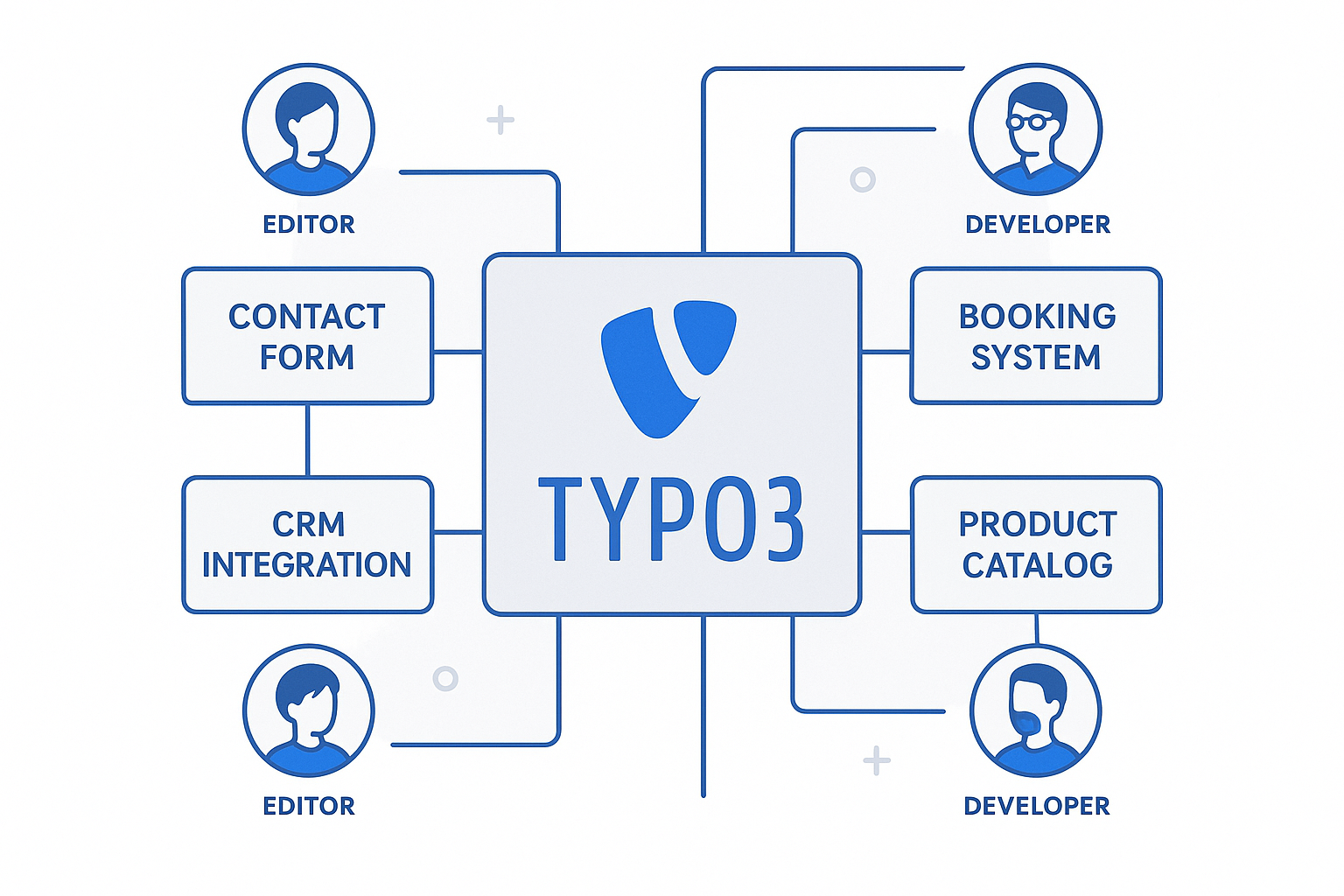
TYPO3 extensions are modular add-ons that enhance the functionality of your TYPO3 website. They can provide anything from contact forms, booking systems, payment gateways, CRM integrations, custom dashboards, or any business-specific tool not available in the core system.
TYPO3 uses Extbase, a modern MVC (Model-View-Controller) framework, and Fluid, a powerful templating engine, which makes it possible to develop structured, scalable, and maintainable custom extensions.
Why Choose Custom TYPO3 Extensions?

While ready-made extensions exist in the TYPO3 Extension Repository (TER), they may not always align perfectly with your workflows or branding. Custom TYPO3 extensions provide:
1. Tailored Functionality
Every business has unique processes. Whether it's a custom application form, a dynamic product catalog, or integration with internal ERP/CRM systems, a custom extension ensures your TYPO3 site meets your exact needs — without workarounds or compromises.
2. Seamless User Experience
A well-built extension is integrated into your site's design and backend workflows. This ensures that editors and site managers can work efficiently, while frontend users get a smooth, intuitive experience.
3. Brand Alignment & Scalability
Custom extensions are built with your brand in mind, maintaining consistency in design, language, and UX. They also allow room to grow — new features can be added later without disrupting the system.
4. Security & Performance
Custom code is written with your use case in mind, avoiding bloated features or unused code that might slow down your site. TYPO3’s strong security architecture also ensures your extension adheres to enterprise-grade safety standards.
Real-World Use Cases of Custom TYPO3 Extensions

Here’s how various industries leverage TYPO3’s extension ecosystem:
- Consulting Firms: Custom client portals with restricted document access.
- IT Agencies: Integration with Git repositories, project management tools, or ticket systems.
- Healthcare: Appointment booking systems, patient record portals (with proper security).
- Education: Student management modules, course catalogs, exam scheduling.
- Logistics: Shipment tracking dashboards, partner login systems.
Each of these examples reflects how a generic CMS can be transformed into a business-specific digital solution.
The Development Process — Step by Step
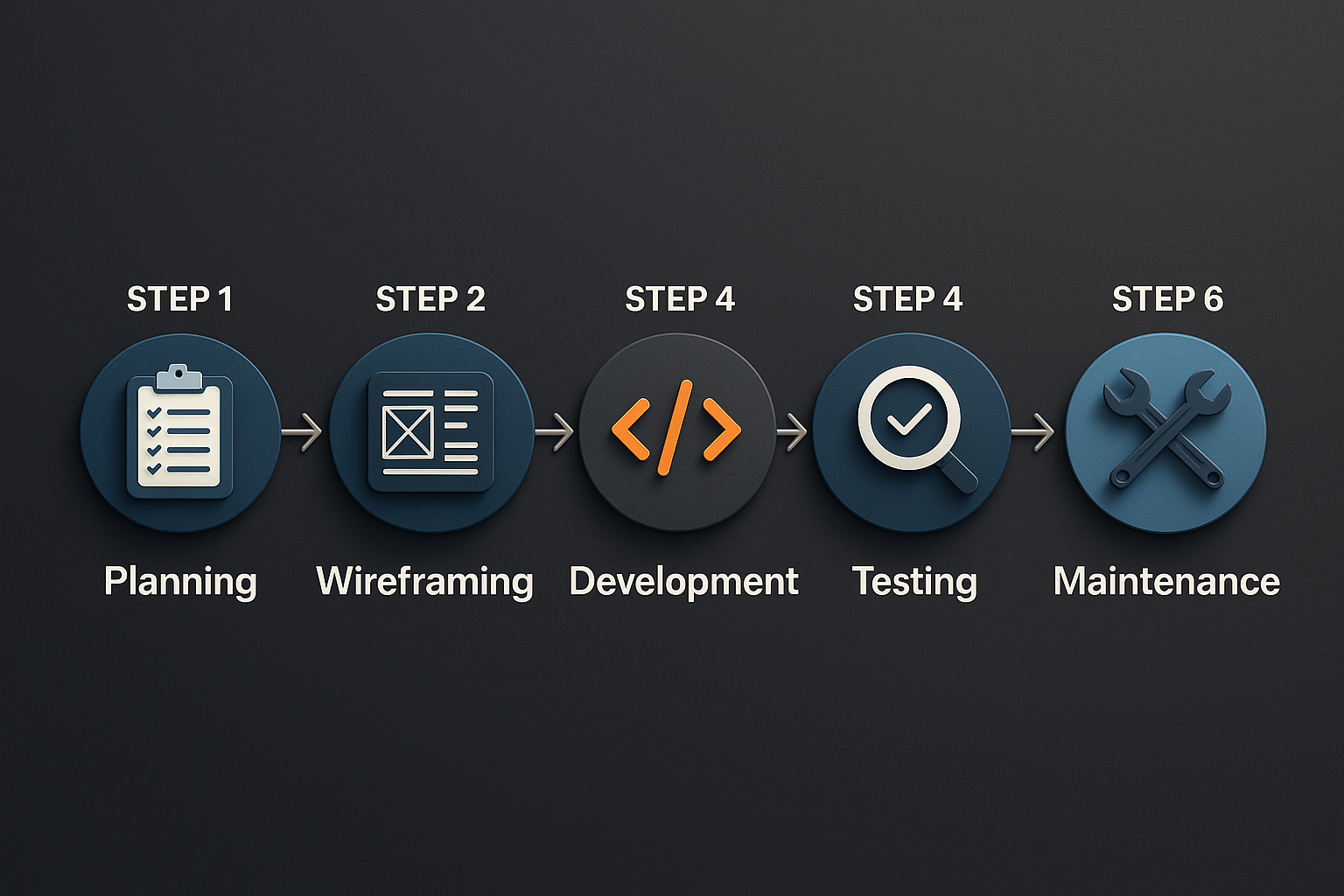
TYPO3 custom extension development typically involves the following stages:
- Requirement Analysis: Understand the business need, define user roles, and outline key functionality.
- Planning & Wireframing: Sketch UI/UX designs, define data models and backend workflows.
- Development (Extbase & Fluid): Build the core logic, frontend templates, backend modules, and apply access control.
- Testing & Debugging: Validate against various browsers, roles, data, and performance benchmarks.
- Deployment & Documentation: Publish the extension and provide easy-to-follow instructions for editors and admins.
- Ongoing Maintenance: Ensure compatibility with future TYPO3 versions, security patches, and performance optimizations.
How Custom TYPO3 Extensions Add Business Value

Let’s break down the real ROI (Return on Investment) of custom development:
- Operational Efficiency: Automate repetitive tasks like data entry, order processing, or scheduling.
- Customer Experience: Offer personalized tools that keep your audience engaged and returning.
- Competitive Advantage: Provide features your competitors lack, helping you stand out.
- Data Integration: Centralize your data across platforms (CRM, ERP, third-party APIs) for better decision-making.
- Revenue Growth: Enable new services or features that can be monetized (e.g., paid member areas, eCommerce).
Conclusion: Is Investing in Custom TYPO3 Extensions Right for Your Business?
If your business relies on digital processes — and most do today — a custom TYPO3 extension isn't a luxury; it's a necessity. By tailoring your CMS to meet your internal and customer-facing needs, you not only improve efficiency but also create more impactful digital experiences.
Partnering with a professional TYPO3 development team ensures that your custom extension is secure, scalable, and future-ready.
